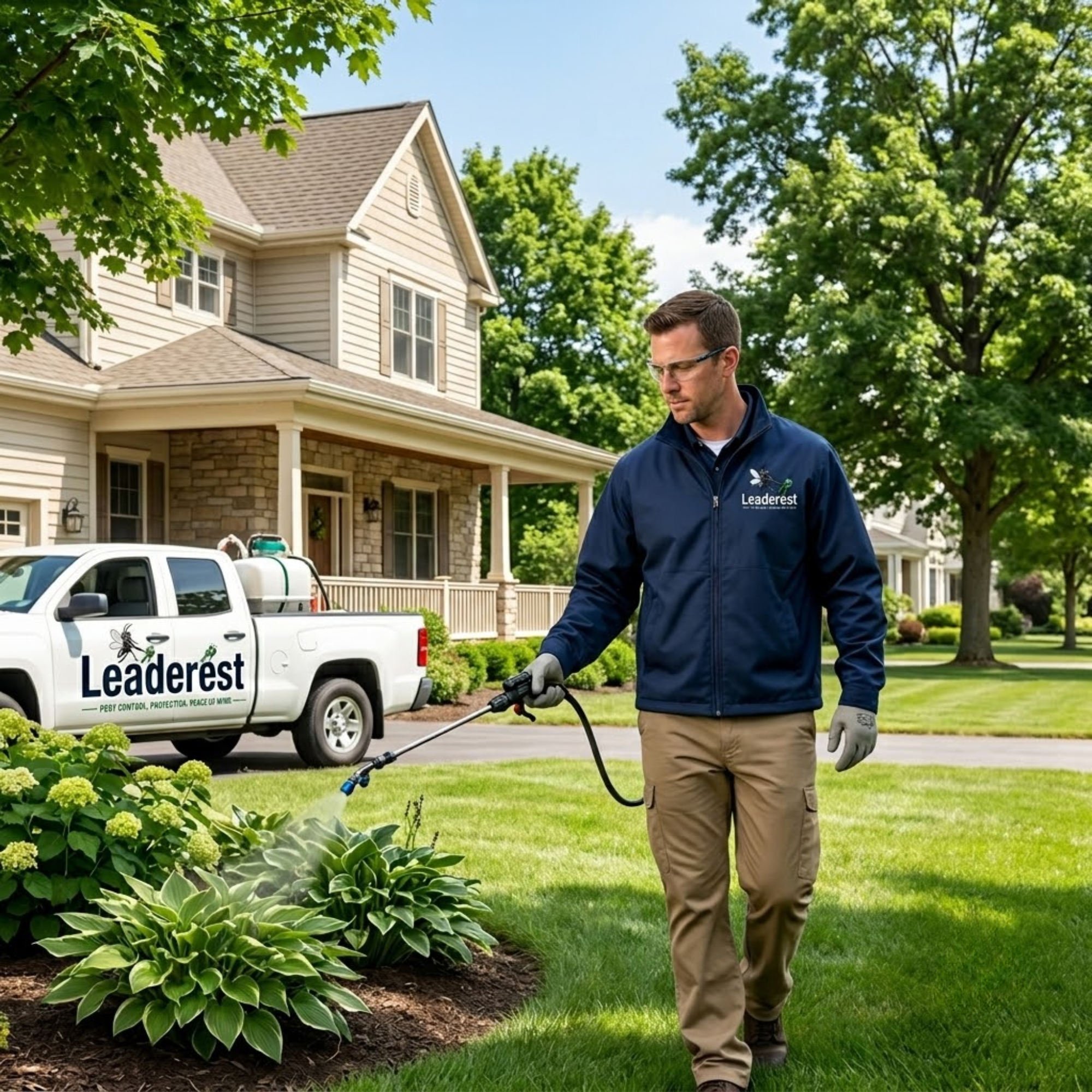
Professional Mosquito Control & Barrier Treatment in Western New York
Western New York's humid summers, frequent Lake Erie rain events, and abundant standing water create ideal conditions for multiple mosquito species from late May through October. Leaderest provides recurring barrier treatments and breeding site elimination for homeowners and businesses in Clarence, Williamsville, East Amherst, and surrounding Erie County communities.
Mosquito Species Found in Western New York
Three mosquito species drive the majority of mosquito pressure in Erie County's suburban communities. Each has distinct breeding behavior, active hours, seasonal timing, and disease relevance — all of which shape how and when we treat your property.
The most abundant mosquito species in Western New York and the primary vector for West Nile Virus in Erie County. Culex pipiens is a dusk-to-dawn biter, most active during the two hours after sunset and the hour before sunrise. It prefers standing, stagnant, or organically enriched water for breeding — clogged gutters, bird baths, and drainage pools are its most common urban breeding sites. It is the species most responsible for that characteristic evening mosquito pressure in WNY backyards.
🦟 Primary West Nile Virus Vector in WNYThe species responsible for the sudden, explosive mosquito surges that WNY homeowners experience after heavy summer rains. Aedes vexans lays its eggs not in standing water but in low-lying soil and vegetation that periodically floods. These eggs remain dormant — viable for years — until floodwater activates them. Adult mosquitoes can emerge in enormous numbers within four to seven days of a significant rain event. Lake Erie weather patterns make Buffalo one of the most rain-impacted metropolitan areas in the eastern US, giving Aedes vexans repeated activation opportunities throughout summer.
⚠ Dominant Post-Rain Surge Species in WNYThe Asian tiger mosquito is the newest established species in Western New York, expanding its range northward as milder winters allow it to overwinter successfully in Erie County. It is immediately distinctive from other WNY mosquitoes because it bites aggressively during daylight hours — particularly in shaded, wooded areas during morning and late afternoon — rather than at dusk. It breeds in very small water collections: a single bottle cap, a flower pot saucer, or a leaf cupped around water is sufficient. Small container breeding makes it especially difficult to control through source elimination alone.
Expanding Range in WNY · Daytime BiterThe Mosquito Life Cycle & Why Standing Water Is the Starting Point
Every adult mosquito begins as a larva in standing water. Understanding the four-stage life cycle — and how fast it progresses in WNY's summer temperatures — explains why breeding site elimination must come first in any effective mosquito control program.
Egg
Laid directly on standing water or in flood-prone soil. Some eggs hatch within days; flood mosquito eggs can remain dormant in soil for years. A single female lays 50 to 300 eggs per batch.
Larva
Larvae hatch within 24 to 48 hours and live in water, feeding on organic matter. They must surface to breathe. This is the stage targeted by larvicide treatments.
Pupa
The non-feeding transitional stage. Pupae remain in water and are resistant to many insecticides. At summer temperatures, this stage lasts only 1 to 4 days before the adult emerges.
Adult
The biting stage. Adults seek a blood meal to develop eggs and begin the cycle again. The entire egg-to-adult cycle takes as few as 7 days in WNY's July and August heat, enabling rapid population surges.
Common Mosquito Breeding Sites on Western New York Properties
These are the sources our technicians inspect and address on every property visit. Eliminating or treating these sites is the first step before any barrier spray application.
Two Complementary Treatment Methods for Complete Mosquito Control
Effective mosquito control requires addressing both adult mosquitoes already present on your property and the next generation currently developing in standing water. We use both methods on every service visit.
Barrier Spray Treatment
Targets adult mosquitoes at restAdult mosquitoes spend the vast majority of their time — up to 90 percent — resting in cool, humid, shaded vegetation rather than actively flying. Barrier spray applies an EPA-registered insecticide to these resting sites: the undersides of leaves, dense shrub interiors, shaded ground cover, tree base areas, and ornamental plantings. When mosquitoes land on treated surfaces, the product eliminates them.
- Eliminates 85–95% of active adult mosquitoes in treated area
- Provides approximately 21 days of residual protection
- Safe for re-entry once product is dry (30–45 minutes)
- Rain guarantee: free re-treatment if heavy rain within 14 days
- Applied every 21 days during peak season (June–August)
Larvicide Treatment
Targets larvae before they become bitersLarvicide products are applied to standing water sources that cannot be eliminated — ornamental ponds, drainage areas, retention basins, and persistently wet areas on larger properties. The primary active ingredient is Bacillus thuringiensis israelensis (Bti), a naturally occurring soil bacterium that is lethal to mosquito larvae but harmless to fish, frogs, birds, bees, and other wildlife when applied at label rates. Insect growth regulators (IGRs) are used as an alternative for certain applications.
- Prevents larvae from developing into biting adults
- Bti is safe for fish, frogs, birds, and beneficial insects
- Effective for 30 days or more depending on conditions
- Critical for ornamental ponds on Clarence and East Amherst properties
- Applied to identified standing water on every service visit
Our Mosquito Control Process
Every Leaderest mosquito treatment is a two-part visit: source inspection and elimination first, barrier treatment second. Skipping source control while applying barrier spray is like bailing a boat without plugging the hole.
Property Survey
We walk the full property to identify standing water sources, adult mosquito resting habitats, and any drainage or grading issues contributing to breeding pressure.
Source Elimination
We eliminate or treat every identified breeding site: advising on standing water removal, applying Bti dunks or IGR to sources that can't be drained, and flagging gutter issues for your attention.
Barrier Spray
We apply targeted barrier spray to all adult mosquito resting sites: shrub interiors, vegetation undersides, shaded ground cover, tree base areas, and lawn perimeter zones where mosquitoes shelter.
21-Day Schedule
Treatments are repeated every 21 days during peak season to maintain continuous protection as product residual fades and new mosquitoes emerge from surrounding areas and post-rain breeding events.
Rain Guarantee
Heavy rain can wash barrier spray off vegetation and simultaneously create new breeding sources. If significant rain occurs within 14 days of treatment, we return and re-treat at no charge.
Mosquito Season in Western New York: When to Protect Your Property
WNY's mosquito season runs roughly five months, but pressure is not uniform — it peaks sharply in mid-summer and can surge unpredictably after heavy rains throughout the season.
Season Opens
Overwintered Culex pipiens females begin laying eggs as temperatures consistently exceed 50°F. Mosquito populations are lower but establishing. First treatment should be applied in late April or May to prevent population buildup before outdoor season begins. Post-spring rain surges of Aedes vexans are common in May and June in the Buffalo area.
First Treatment WindowMaximum Pressure
The hottest months accelerate the egg-to-adult cycle to as few as 7 days, allowing mosquito populations to rebuild rapidly between treatments. 21-day recurring treatments are essential throughout this window. Lake Erie thunderstorm patterns produce frequent heavy rain events in July and August, regularly triggering Aedes vexans surges across Erie County.
⚠ Peak Mosquito SeasonSeason Winds Down
Mosquito activity diminishes as nighttime temperatures drop below 50°F in September. A September treatment provides protection through the warmest early-fall evenings. Culex pipiens females begin seeking overwintering sites in October. Most outdoor entertaining moves indoors, and mosquito pressure typically ends by late October in WNY.
Declining Activity · Final TreatmentWe provide mosquito control for homeowners and businesses in:
Mosquito Control FAQ for Western New York Homeowners
Everything you need to know about barrier treatments, breeding sites, product safety, and what drives WNY mosquito pressure throughout the season.
-
Mosquito barrier spray works by applying an EPA-registered insecticide to the vegetation and surfaces where adult mosquitoes rest between blood meals. Mosquitoes spend 80 to 90 percent of their time resting in cool, shaded, humid locations — the undersides of leaves, dense shrubs, tall grass bases, and shaded garden areas — rather than actively flying. When they land on treated vegetation, the product eliminates them on contact.
A properly applied barrier treatment provides two layers of protection: immediate knockdown of active mosquitoes present at the time of treatment, and residual protection as remaining product continues to eliminate new mosquitoes that land on treated surfaces. Under normal conditions, this residual lasts approximately 21 days, which is why we schedule return treatments on that interval during peak season.
-
Under normal conditions, a professional mosquito barrier treatment remains effective for approximately 21 days. Several factors can shorten this window: heavy rainfall washes product off treated vegetation; very hot, dry conditions accelerate product degradation; and dense vegetation may require more product to achieve full coverage.
Western New York's summer weather — characterized by frequent thunderstorms from Lake Erie — makes rainfall a real factor in treatment effectiveness. This is why Leaderest offers a rain guarantee: if significant rainfall occurs within 14 days of your treatment and mosquito activity returns, we will re-treat your property at no additional charge.
-
West Nile Virus is the primary mosquito-borne disease concern in Western New York and is transmitted by Culex pipiens, the common house mosquito. While many West Nile infections produce no symptoms or mild flu-like illness, severe cases can cause neurological complications, particularly in adults over 60. Erie County has documented West Nile Virus activity in mosquito populations in recent years.
Eastern Equine Encephalitis (EEE) is present in New York State, though cases in humans are rare. It is more severe when it does occur, with high mortality and significant neurological impact in survivors.
The expanding Aedes albopictus (Asian tiger mosquito) is a competent vector for dengue fever, chikungunya, and Zika virus in warmer climates, though local transmission of these diseases in Western New York is currently not established. As the tiger mosquito's range expands northward into Erie County, ongoing surveillance and control remain important.
-
Post-rain mosquito surges in Western New York are primarily driven by Aedes vexans, the floodwater mosquito. This species has a unique reproductive strategy: females lay eggs in low-lying soil and leaf litter that periodically floods rather than in standing water. These eggs can remain dormant and viable in the soil for years. When floodwater activates them, they hatch rapidly and develop into adults within four to seven days — producing the sudden surge of biting mosquitoes that WNY residents commonly experience one to two weeks after a heavy rain.
Additionally, heavy rain can wash barrier spray product off treated vegetation, reducing its effectiveness against Culex pipiens that were already present. The combination of product washout and a new Aedes vexans hatch can make post-rain mosquito pressure significantly worse than pre-rain levels, even shortly after a professional treatment. Our rain guarantee addresses this: we return and re-treat at no charge if significant rain occurs within 14 days of service.
-
Barrier spray treatments are safe for children and pets to re-enter once the product has fully dried — typically 30 to 45 minutes after application. We apply to mosquito resting areas (the undersides of leaves, shrub interiors, shaded vegetation) rather than to open flowers, vegetable gardens, or areas where pollinators are actively foraging.
If you have active vegetable gardens, active beehives, or specific concerns about pollinators, please let us know at the time of scheduling. We can adjust treatment timing to early morning before pollinators are active, avoid treatment of flowering plants, and create buffer zones around sensitive areas. Larvicide products like Bti are non-toxic to fish, frogs, birds, and beneficial insects and are safe for use in ornamental ponds with fish.
-
Barrier spray targets the adult mosquito population already present on your property. Applied to resting vegetation, it eliminates adult mosquitoes on contact and provides residual protection for approximately 21 days. It is the frontline tool for immediate, visible reduction in mosquito activity in your yard.
Larvicide targets mosquito larvae in standing water before they develop into biting adults. Applied to water sources that cannot be drained — ornamental ponds, persistent drainage areas, retention basins — the primary larvicide product we use contains Bacillus thuringiensis israelensis (Bti), a naturally occurring soil bacterium that is lethal to mosquito larvae but non-toxic to fish, frogs, birds, bees, and other wildlife. Larvicide is the source-control component that prevents the next generation of mosquitoes from ever reaching adulthood. Both methods are used together on every service visit for comprehensive protection.
-
Standing water elimination is one of the most impactful things a homeowner can do, and we strongly recommend it — but it rarely eliminates mosquito problems on its own for two reasons.
First, adult mosquitoes can fly one to two miles from their breeding site. Even if your property has zero standing water, your yard will still be affected by mosquitoes breeding in neighboring properties, storm drainage infrastructure, wetlands, Ellicott Creek, and agricultural drainage areas that you cannot control. Second, some breeding sources on your property — low-lying drainage areas, ornamental ponds, persistently wet areas — can't be fully eliminated and require ongoing larvicide treatment.
Source elimination should be your foundation — remove bird bath water weekly, clean gutters, and drain anything that holds water — combined with professional barrier spray to control the adult population arriving from off-property sources.
-
Yes. Leaderest provides mosquito control programs for commercial properties throughout Western New York, including restaurants and breweries with outdoor seating and patio areas, event venues and wedding facilities, homeowners associations (HOAs) and condominium communities with common outdoor areas, golf courses, parks, recreational facilities, campgrounds, and corporate office campuses with outdoor common spaces.
Commercial programs are customized to property size, usage pattern, and scheduling requirements. We can design event-specific treatment programs timed around outdoor events, or recurring seasonal programs that maintain consistent protection throughout the WNY mosquito season (May through October). Contact us at (716) 536-5806 to discuss a commercial mosquito control program for your property.
Take Back Your Outdoor Space This Season
Free quotes, 48-hour scheduling, and eco-safe mosquito barrier treatments for homeowners and businesses in Clarence, Williamsville, East Amherst, and all of Western New York.